
Notifications 7
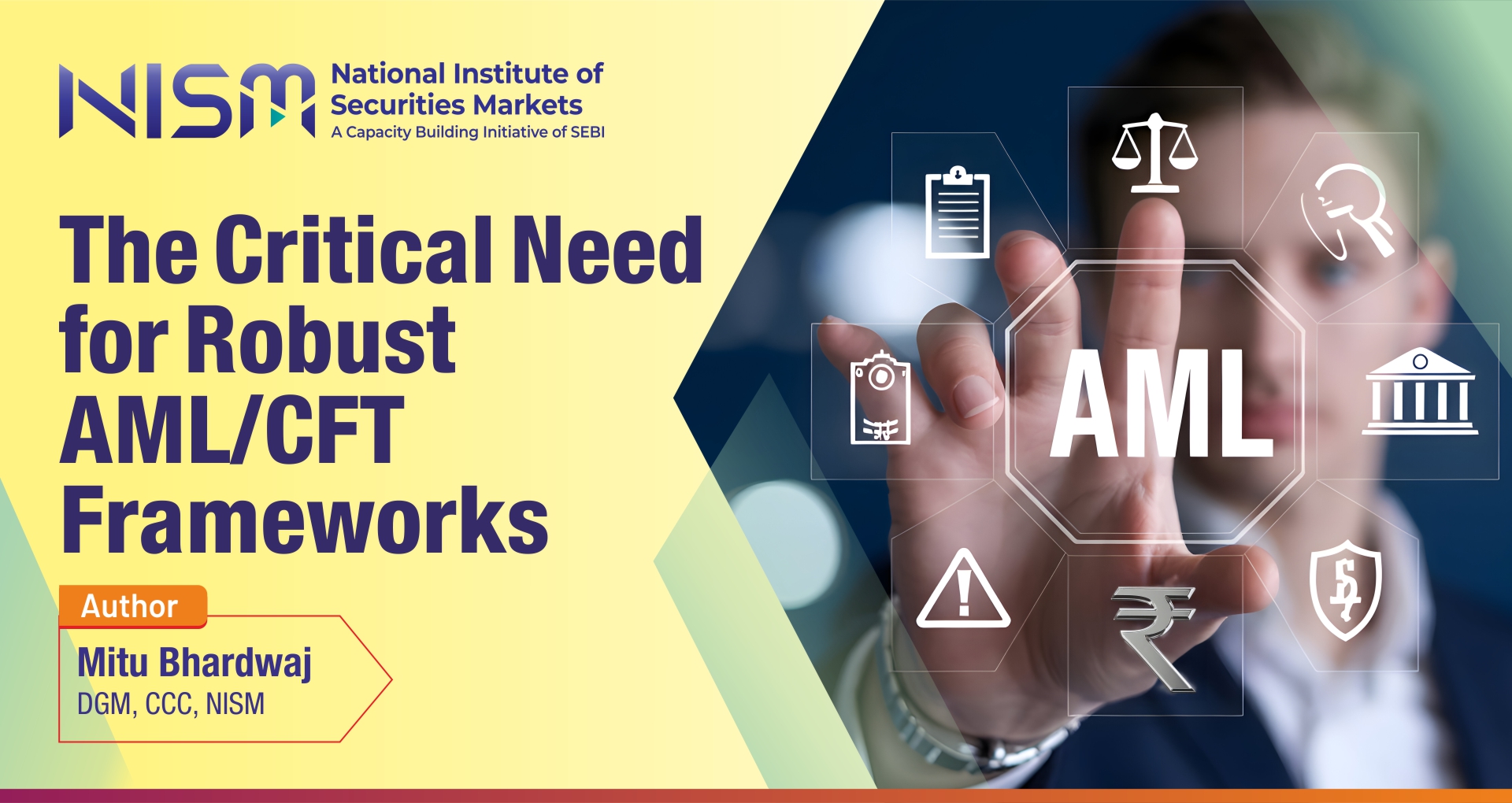
The threats of money laundering (ML) and terrorist financing (TF) have grown exponentially due to the increasingly interconnected nature of the global financial landscape. These illicit activities severely impact the economy by causing distortions and eroding trust in financial markets and institutions.
In dynamic ecosystems like the International Financial Services Centre (IFSC), Gift City, India and India’s securities market, a robust AML/CFT framework is essential. Specifically, the IFSC ecosystem faces heightened exposure to ML and TF risks due to increased cross-border transactions, global investor participation, and multi-currency operations.
AML and CFT policies are primarily derived from the 40 recommendations issued by the Financial Action Task Force (FATF), which was established by the G7 nations in 1989.
India, as a member of the FATF and the Asia/Pacific Group on Money Laundering (APG), implements these international standards through various domestic frameworks:
The Prevention of Money Laundering Act (PMLA), 2002.
SEBI’s AML guidelines.
The compliance framework mandated by the International Financial Services Centres Authority (IFSCA).
Core Pillars of AML/CFT Compliance
The international framework focuses on several key components that institutions must adopt:
Risk-Based Approach (RBA): Financial institutions must proactively identify and assess their specific ML/TF risks.
Customer Due Diligence (CDD): This includes adhering to proper Know Your Customer (KYC) norms and verifying the beneficial ownership of accounts.
Record Keeping and Reporting: Institutions are mandated to timely report suspicious transactions to national financial intelligence units, which in India is the FIU-IND.
International Cooperation: Collaboration between global agencies and countries is crucial for fighting cross-border financial crime.
Strengthening Capacity: The NISM Certification Initiative
To strengthen professional capacity and promote ethical compliance, the National Institute of Securities Markets (NISM) has introduced dedicated Certification Examinations focused on AML and CFT in the Securities Market and the IFSC Ecosystem. This initiative is pivotal for aligning India’s financial systems with international best practices and enhancing awareness among market participants.
The key objectives of these certifications, targeting professionals such as fund managers, brokers, compliance officers, and intermediaries, include:
Enhance Understanding of AML/CFT Frameworks: Covering Indian laws, FATF standards, and IFSCA guidelines.
Promote Compliance Culture: Empowering professionals to effectively implement AML controls, conduct due diligence, and report suspicious activities.
Develop Risk Awareness: Educating participants on how to identify vulnerabilities and mitigate risks in both domestic and cross-border transactions.
Align with Global Standards: Ensuring the Indian securities and IFSC ecosystem maintains parity with global AML/CFT expectations.
Details of the examinations are available on the NISM website www.nism.ac.in
Author : Mitu Bharadwaj, DGM, CCC, NISM

Net Zero Goal Meaning In the Paris Agreement at the Conference of Parties (COP-21), the world discussed the worsening effects…
Financial Literacy – Your Most Powerful (and Missing) Life Skill By 2035, Gen Z will have a 50% share in…

The Union Budget 2026, presented by Finance Minister Nirmala Sitharaman, marks a watershed moment in India’s economic narrative. Dubbed the…
© 2026 National Institute of Securities Markets (NISM). All rights reserved.
