
Notifications 12
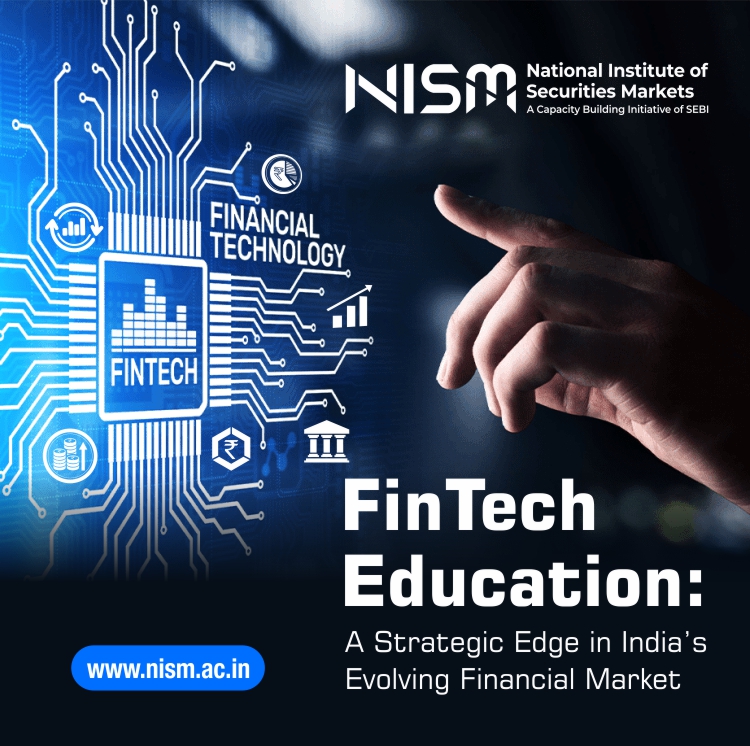
India’s FinTech sector is among the fastest-growing in the world, with a market value crossing billions and expanding at an unprecedented pace. Technologies like AI, blockchain, data analytics, and mobile-first platforms are redefining how financial services are delivered and consumed. In this context, FinTech education is becoming an essential differentiator for professionals and students alike.
The Indian securities market, regulated by the Securities and Exchange Board of India (SEBI), is at the forefront of this transformation. In recent years, digital innovation has significantly increased retail participation, especially through app-based investment platforms that simplify access to stock markets and financial instruments. These platforms have empowered a new generation of investors from across the country, contributing to a more inclusive and dynamic market. As this tech-driven ecosystem continues to grow, there is rising demand for professionals who can combine financial expertise with technological fluency. FinTech certification programs are emerging as a valuable response to this demand. They equip learners with critical skills in areas such as algorithmic trading, robo-advisory systems, blockchain applications, RegTech, digital compliance, and cybersecurity.
A well-structured FinTech program, especially one contextualized to Indian markets and regulations, provides not just theoretical insights but also practical exposure. Participants learn about SEBI’s evolving regulatory frameworks, digital KYC and AML procedures, emerging financial products, and the backend architecture of modern financial systems. Hands-on training using industry tools, real-world case studies, and capstone projects ensure that learning remains application-focused and relevant. For entrepreneurs, such education offers clarity on product design, market infrastructure, and compliance, helping them build innovative yet responsible FinTech solutions. Understanding how to balance user experience, data security, and regulatory mandates is key to launching scalable and sustainable ventures in today’s ecosystem.
As India advances toward a digital-first financial future, with rapid adoption of technologies like UPI, account aggregators, and AI in finance, acquiring FinTech skills is no longer optional. It is a strategic investment one that can shape careers, inspire innovation, and strengthen the financial ecosystem. Whether you are looking to upgrade your skills, transition into a new role, or launch a FinTech venture, FinTech education offers the roadmap to relevance and impact in a changing financial world.
Ms. Rupali Sathe
Last Updated on: September 3, 2026 The minds inside a derivatives account SEBI’s Department of Economic and Policy Analysis has…

A Yen Rescue Dressed in Euros Washington’s intervention was ingenious in its plumbing and silent on the flows that matter…

The Closing Auction Needs Attendance, Not a Rethink A well-attended closing auction benefits investors by lowering trading costs, providing a…
© 2026 National Institute of Securities Markets (NISM). All rights reserved.
