
Notifications 15
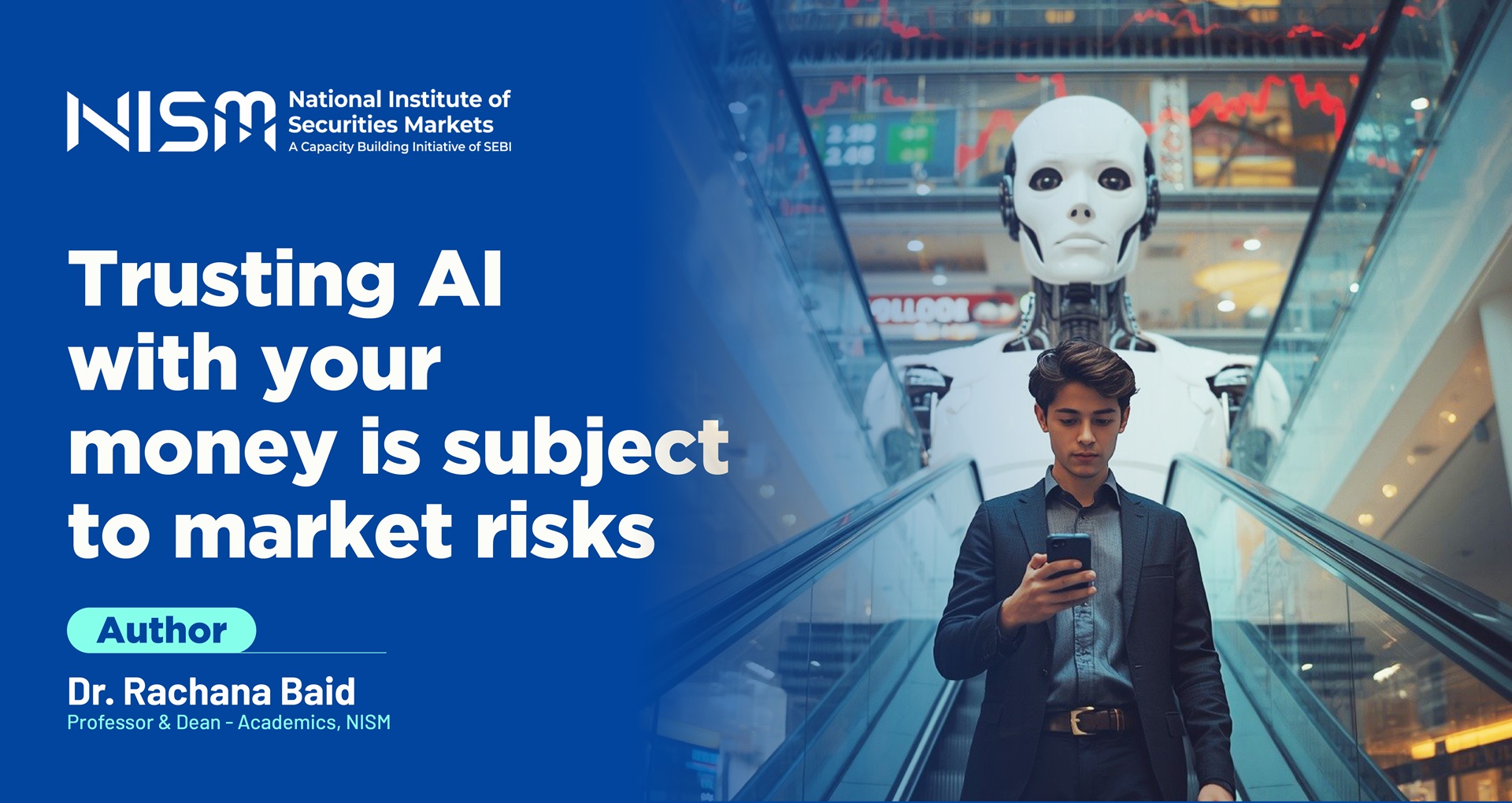
If you have asked ChatGPT, Gemini or Claude any money question this year, be it tax on your mutual fund redemption, or whether to prepay your home loan, or how NPS withdrawal works, you are not alone. Millions of people turn to AI chatbots for financial guidance before they turn to human intelligence, simply because it is free, instant, and does not require an appointment. The trouble is, as suggested by a new study, the answer you got back may have been wrong, and worst of all, you would have had no way of knowing. After all, there is no free lunch!
Saturn, a UK fintech firm that builds tools for financial advisers, commissioned a study in July 2026. They asked an experienced paraplanner to test 18 of the most widely used AI models against 121 real-world money questions. Each question was asked five times per model, since AI answers can vary from one attempt to the next, producing over 10,000 responses in total. Every answer was measured against a strict standard: it had to contain every figure, deadline, rule and warning that a qualified adviser would consider essential.
The results were shocking to say the least. The overall accuracy rate across all 17 current models was 43 per cent. That means if you asked an AI chatbot a financial question, the answer was either wrong or incomplete more often than it was right. On harder, multi-step questions the failure rate rose to 88 per cent. Even on simple questions, the kind a first-time investor might ask about what a term means or how a product works, accuracy was only 54 per cent.
Further, the free chatbot advice (which most investors fall for) was accurate only 37 per cent of the time against roughly 51 per cent for paid ones (43 percent average). If AI is meant to widen access to financial guidance, it is currently doing that unevenly.
What kind of mistakes are made by these AI models ? Not vague or philosophical ones. The study’s examples shows that the errors AI models make are the ones most investors will reply on to make a financial decision. One such question posed to a free model was which debts should a person pay-off first? The model answered to prioritise the ones with the highest interest rate, without mentioning that unpaid rent or a missed council tax bill. The missed rent or tax bill carries a far more serious risk in the UK than a high-interest credit card. Translate that to an Indian household juggling a personal loan, a credit card bill and rent, and the same blind spot could apply.
The AI models also invent rules that do not exist also called as hallucination. For instance, the bot told a student exploring studying at UK that her loan repayment would simply stop once she leaves UK permanently. Likewise, an advice on pensions would have exposed the investor to an unauthorised-payment tax charge of up to £17,500 (roughly ₹22-23 lakh at current exchange rates).
The detail that should worry the investors most is that the wrong answers sounded exactly like the right ones. The study found that models rarely flagged uncertainty, and gave no signal that a question might be beyond what they could reliably answer. A confident, fluent, well-structured wrong answer is far more dangerous than an uncertain one, because you have no clue to go check it elsewhere.
There is no equivalent Indian study yet, so we do not know our exact numbers, and this remains a UK-specific finding rather than direct evidence about Indian outcomes. But there is little reason to assume Indian financial questions are easier for these models to get right. The queries on capital gains tax, indexation changes, NPS and EPF choices, prepayment of home loans and mutual fund taxation in India is as layered as in the UK. Further India-specific rules are likely to make up a far smaller share of any AI model’s training data than UK or US rules do, and that could easily raise the error rate here. It is worth noting here that SEBI’s investor survey found that 62 per cent of investors say they are influenced by finfluencers, many of whom offer no accountability or verified track record. That is precisely the vulnerability a general-purpose AI chatbot can deepen further, quietly, and without ever being called a finfluencer at all.
So, what should you do differently? Treat an AI chatbot’s financial answer the way you would treat a stranger’s confident opinion at a dinner party –worth paying attention to, not worth acting on unchecked. Use it to understand a concept or draft the questions you should ask a professional, not to make the final call on anything involving tax, debt prioritisation, or retirement withdrawals. If a chatbot gives you a specific number, a threshold, a deadline, or a tax figure, verify it against a primary source, the income tax department’s site, your fund’s own factsheet, or an actual adviser, before you rely on it. And be most cautious exactly where the study found AI to be weakest: complex, multi-part questions with real money and real deadlines attached, not general queries. The responsibility sits with you as the investor to treat AI-generated financial advice as a first draft, not a final answer, especially where taxes, debts, and retirement money are on the line.
Author: Rachana Baid, Dean – Academics (NISM)
Note:
The article is originally published in Mint: https://www.livemint.com/money/personal-finance/ai-chatbots-financial-advice-accuracy-risks/amp-11791784853049.html
Trusting AI with your money is subject to market risks If you have asked ChatGPT, Gemini or Claude any money…
Why are retail investors voting with their wallets for passive products? The Assets under Management (AuM) of passive equity funds,…

Last Updated on: September 28, 2026 The Indian corporate bond market has grown from ₹17.5 lakh crore at the end…
© 2026 National Institute of Securities Markets (NISM). All rights reserved.
