Page 11 – National Institute of Securities Markets (NISM)
(NISM)

The National Institute of Securities Markets (NISM) is a public trust established in 2006 by the Securities and Exchange Board of India (SEBI), the regulator of the securities markets in India. The institute carries out a wide range of capacity building activities at various levels aimed at enhancing the quality standards in securities markets.

Anti Money Laundering Professional in Securities Market

Author: Denny B Justin

What if a giant exposure of financial crime, corruption, and wrongdoing happened in today’s world? Have you heard of the Panama Papers leak? According to the United Nations, the estimated amount of money laundered globally in one year is 2 to 5 percent of global GDP or $800 billion to $2 trillion. This is the heart of broking operations management in the securities market, where fortunes are made and lost in the blink of an eye. In 2016, the world was shocked at the Panama Papers leak, a massive data of more than 11.5 million financial and legal records exposed the vast network of offshore shell companies and revealed how individuals, corporations, and public figures across the globe were using these entities to hide wealth, evade taxes, and potentially engage in money laundering activities. This incident shows the importance of Anti Money Laundering Professionals in the securities market.

So, what is AML? What are the responsibilities of an AML Professional?

Anti Money Laundering (AML) refers to a set of legal and regulatory measures, policies, and procedures implemented by financial institutions to detect and prevent the illegal process of concealing the origins of illegally obtained money. Anti Money Laundering detects illegal activities related to money laundering and the financing of terrorism. Money laundering typically involves disguising the source of unlawful funds, making them appear to come from legitimate sources. The AML professional is a master of financial detective work, constantly scanning the vast landscape of securities transactions for any sign of irregularity. The primary responsibility of an AML professional is to evaluate the potential risks associated with clients, products, and geographic locations to identify vulnerabilities within organizations. AML professionals perform thorough consumer due diligence on clients to verify their identities and assess the risk they pose. They monitor systems to track transactions, identify unusual patterns that may indicate money laundering, and investigate any suspicious activity.  AML professionals ensure that firms comply with local and international laws and regulations.

Now, we understand the importance of AML professionals and their responsibilities. You must be wondering how an individual can become the safeguard of the securities market. There are various certification courses available for AML professionals in India and abroad. For example, the National Institute of Securities Markets (NISM) offers a certification course on AML- Certified Anti-Money Laundering Manager (CALM). Such certified courses will help one to build a career in AML. 

Money laundering seriously threatens the nation’s security market and economic situation. AML professionals are indispensable in ensuring that the security market is not used for money laundering. They help their organizations comply with the AML requirements and manage the AML risks efficiently. AML professional who protects the security markets are the gatekeepers who ensure that the securities market remains a safe place for investment by developing and implementing effective policies, procedures, and controls that detect and prevent money laundering activities within the securities industry. National and International authorities have enacted various laws and regulations to prevent money laundering in the security market. For example, in India, the Prevention of Money Laundering Act (PMLA), 2002, along with the rules and regulations prescribed by the Securities and Exchange Board of India (SEBI), sets out the anti-money laundering (AML) framework for the securities market intermediaries such as brokers, depository participants, portfolio managers, mutual funds, etc.

In a world where financial criminals are becoming increasingly sophisticated, AML professionals are the gatekeepers who play a pivotal role in safeguarding the industry from the criminal activities of money launderers and financial criminals. They also enhance the security market’s integrity, transparency, and reputation. AML professionals must have the skills, knowledge, and experience to perform their functions effectively.  They can acquire or enhance these skills and knowledge by pursuing certification courses on AML. The incident of the Panama Papers serves as a reminder of the need for their vigilance and expertise in safeguarding the global financial system. 

Unlocking Career Opportunities in India’s Thriving Securities Markets

Author: Rajalakshmi R S

India’s securities markets have emerged as a dynamic hub, offering plenty of career opportunities for individuals with a passion for finance, a knack for analysis, and an appetite for success. This phenomenon is especially evident in the post-COVID era due to the economic position of our country as well as interest from new retail as well as institutional investors.

These markets consist of not just stock exchanges, mutual funds, brokerage firms, but also underwriters, commercial Banks etc, and are at the forefront of the country’s economic growth story. Here are 05 careers you can opt for in Securities Markets in this new era of securities markets:

1. Securities Market Data Scientist:
A data scientist who takes up data analytics, statistical analysis, machine learning, and data visualization techniques to extract valuable insights and inform investment decisions within the securities market.

2. Wealth Manager:
Wealth manager primarily does the risk analysis, financial planning, and investment management, especially of high-net-worth individuals (HNWIs).

3. Exchange Operator:
Exchange Operators can be individuals or an entity involved in operating and managing financial exchanges, including stock exchanges and commodity exchanges.

4. Financial Educator:
Financial Educators help in providing financial education across the country Financial Workshops and Seminars, Counselling, and Outreach

5. Financial Journalist/Reporter:
These Journalists report and analyse financial news, trends, and developments for various media outlets, including newspapers, magazines, television, radio, and online publications to inform the public, investors, and businesses about the latest developments.

Interested in Securities Markets related programs? Click here

Integration of NPS SoT in CAS

Author: Kiranjit Kaur

The Pension Fund Regulatory Development Authority (PFRDA) through its circular PFRDA/2023/26/Sup-CRA/07 dated August 10, 2023 has introduced a simplified and secured way to keep the NPS subscribers informed about their NPS Investments. Earlier the investors were reliant only on the periodic NPS Statement of Transaction (SoT) or could view the same online in the CRA login. Now, in line with the government’s vision to create a comprehensive record of every individual’s financial assets, a facility to integrate the NPS SoT with the Consolidated Account Statement (CAS) is provided.
The CAS is issued by the SEBI registered depositories viz., National Securities Depository Limited (NSDL) and Central Depository Services Ltd (CDSL). It includes Demat Account holdings and Mutual Fund holdings of the investors.

The salient features of the integrated NPS SoT in CAS are as follows:
a. Consent Basis:
The NPS Subscribers need to give their consent for the inclusion of NPS SoT on the particular website of the Central Record Keeping Agencies (CRAs). The CRAs registered under NPS are Computer Age Management Services Ltd., KFin Technologies Limited and Protean eGov Technologies Ltd.

b. Nominal Charges:
A fee of Re 1/- will be charged for each physical statement requests, while 10 paise will be applicable for each email statement.

Benefits of incorporating NPS SoT in CAS:
a. One statement for different investments: There will be no need to maintain separate statements for different investments because the CAS summarizes the details into one comprehensive statement.
b. Easy to manage: The CAS reduces paperwork and provides a consolidated view of all investments at one place, making it easier to manage and track them.
c. Ensures Safety: With the monthly updates, the Subscribers can stay alert and prompt in identifying any unauthorized transactions. In case of fraudulent activities, the Subscribers can inform the associated intermediary at the earliest for required action.
d. Make informed decisions: The subscribers/investors can also easily monitor the performance of their investments, stay up to date with any changes, and make informed decisions accordingly.

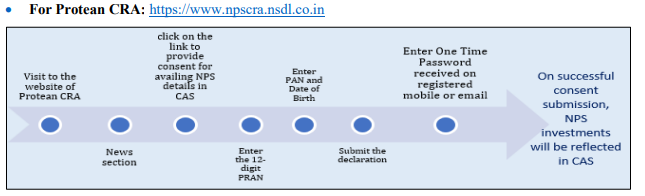
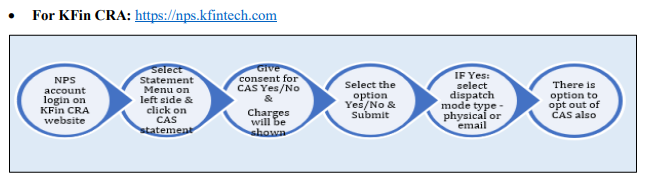
Approximately 50000 NPS subscribers have opted for this facility so far. You may opt too with the following steps:
• For Protean CRA: https://www.npscra.nsdl.co.in

• For KFin CRA: https://nps.kfintech.com

• For CAMS CRA: https://www.camsnps.com/
1.Log in to CAMS NPS Account, and navigate to the “statements” tab.
2.In the Statement section, select the “CAS” option.
3.Provide consent for sharing NPS details with the depository and “submit”.


SEBI’s Cybersecurity Guidelines for MIIs: Safeguarding the Future of Indian Securities Market

Author: Sandeep K Biswal

In this blog, we’re exploring the topic of cybersecurity and its importance for Market Infrastructure Institutions (MIIs) in the Securities Market, thanks to SEBI’s latest guidelines.

The securities market is a hub of financial activity, and it’s no secret that this makes it a prime target for cyber-attacks. From stock exchanges to clearing corporations, MIIs play a vital role in keeping this financial ecosystem ticking. With SEBI’s guidelines, they need to have a robust cyber security framework for the smooth and uninterrupted functioning of the securities market.

So, what exactly do these guidelines cover?

Well, they cover a range of cyber-related aspects, from risk management to governance, incident reporting, and even setting up a robust cybersecurity framework. Broadly, the MIIs are required to:
● Identify and Assess Risks: Just like we lock our doors at night, MIIs need to identify potential threats and vulnerabilities in their systems.
● Establish Governance Frameworks: Think of this as having a captain steering the ship. MIIs need clear policies and procedures for managing cybersecurity risks.
● Incident Reporting: When something goes wrong, it’s crucial to report it ASAP. This helps in dealing with the issue swiftly and effectively.
● Security Awareness Programs: Educating staff and stakeholders about cybersecurity is like teaching them self-defence. It’s a must!
● Cyber Resilience Testing: Imagine running a fire drill at your workplace. Similarly, MIIs must simulate cyber incidents to prepare for the real scenarios.

Conclusion
To comply with the SEBI guidelines, MIIs must re-skill their existing workforce or employ new cybersecurity and cyber resilience professionals. If you have a passion for cybersecurity and want to take your knowledge to the next level, check out the NISM eLearning course Certificate in Cyber Security Foundation. It’s your chance to become a cybersecurity professional and contribute to the safety of your organization.


The Role of Stock Market Courses in Shaping Future Financial Analysts

The financial world is a dynamic and complex ecosystem that requires in-depth knowledge and expertise to navigate successfully. Aspiring financial analysts face the challenge of understanding the intricacies of the stock market, investment strategies, and economic trends. In this pursuit, stock market courses online with certificates emerge as pivotal resources that play a transformative role in shaping the careers of future financial analysts. This blog delves into the roles and importance of stock market courses, shedding light on how they can benefit individuals aspiring to become adept financial analysts.

Understanding Stock Market Courses

Stock market courses have gained prominence in the contemporary educational landscape, especially due to their online availability and certification. These courses provide a systematic framework for comprehending the intricacies of the stock market, investment tools, trading methodologies, and portfolio administration. What makes these courses even more impactful is their inclusive nature, catering to a diverse audience ranging from newcomers with limited financial understanding to seasoned practitioners aiming to refine their skills.

The advent of online platforms has democratised financial education, particularly in countries such as India, by breaking down geographical barriers and allowing individuals to engage with course content at their preferred pace and convenience. As a result, learners are empowered to tailor their learning journeys according to their schedules, making education accessible irrespective of their existing commitments.

This democratisation of financial education not only fosters an environment of continuous learning but also plays a pivotal role in equipping a broad spectrum of individuals with the knowledge and skills required to navigate the complex realm of the stock market. In this digital age, stock market courses online with certificates are pivotal enablers of skill enhancement, propelling newcomers and professionals towards proficiency in the dynamic field of finance.

Roles and Importance of Stock Market Courses

Foundational Knowledge: Stock market courses are the bedrock upon which future financial analysts build their expertise. These courses equip participants with essential knowledge by providing a robust foundation in financial concepts, market analysis, and investment strategies. Covered topics span from grasping the intricacies of equity markets to mastering technical and fundamental analysis. Furthermore, risk management and the interpretation of financial statements are explored, enabling individuals to develop a solid understanding of key aspects that underpin effective financial decision-making.

Hands-on Learning: The experiential dimension of many stock market courses online with certificates is invaluable. Through practical exercises, simulations, and virtual trading platforms, participants are immersed in real-world scenarios. This hands-on approach bridges the gap between theory and practice, empowering learners to apply theoretical concepts to tangible situations. Engaging in simulated trading fosters a practical understanding of investment decision-making dynamics, helping individuals refine their skills in navigating the unpredictable landscape of financial markets.

Comprehensive Insight: Stock market courses offer a panoramic view of the financial ecosystem, catering to the holistic understanding required of financial analysts. By delving into various asset classes, economic indicators, market trends, and global influences, participants gain insights that enable them to make informed recommendations. This comprehensive perspective equips financial analysts with the ability to provide nuanced insights to clients, considering many factors that shape investment landscapes.

Technical Skills: Proficiency in using tools and software for data analysis, charting, and research is essential for financial analysts. Stock market courses recognise this need and provide participants with indispensable technical skills in modern finance. Participants learn to analyse market trends, employ quantitative analysis, and make data-driven investment decisions. This technical understanding empowers financial analysts to harness the power of data for strategic decision-making.

Risk Management: Successful financial analysts manage risk within investment portfolios. Stock market courses emphasise risk assessment techniques, portfolio diversification, and hedging strategies. These skills are paramount, as they enable analysts to safeguard investments and optimise returns while navigating the inherent uncertainties of financial markets.

Certification: The culmination of stock market courses online in India often includes certification, a tangible recognition of participants’ commitment to learning and professional development. These certificates bolster the credibility of aspiring financial analysts and indicate their dedication to staying attuned to industry trends. This validation enhances their appeal to potential employers and clients, underscoring their readiness to excel in financial analysis.

Taking Advantage of Stock Market Courses for Shaping Your Future as a Financial Analyst

1. Choose Reputable Courses: Research and select stock market courses offered by reputable institutions or platforms. Look for courses with experienced instructors, a comprehensive curriculum, and positive reviews from past participants.

2. Customize Learning: Depending on your level of expertise, choose courses that align with your current knowledge. Beginners may start with introductory courses, while those with some experience might opt for advanced courses focusing on specific areas of interest.

3. Consistent Learning: Stock market courses online in Indiaare not one-time endeavours. Continuous learning is essential to stay updated with evolving market trends and strategies. Consider enrolling in refresher courses or advanced modules to deepen your understanding.

4. Apply Knowledge: Practical application is crucial. Participate in virtual trading, analyse market data, and simulate investment decisions to translate theoretical knowledge into practical skills.

5. Networking: Online stock market courses often provide opportunities to connect with fellow participants, instructors, and industry experts. Networking can provide insights, mentorship, and potential job opportunities in the financial sector.

6. Stay Curious: The financial landscape is ever-changing. Cultivate a curious mindset, explore emerging investment trends, and stay curious about technological advancements shaping the financial industry.

Final Takeaway

Stock market courses are indispensable in shaping the future of aspiring financial analysts. They offer foundational knowledge, practical skills, and insights necessary to excel in the competitive world of finance. By leveraging the advantages of stock market courses online in India with certification, individuals can embark on a journey of continuous learning, honing their expertise, and positioning themselves as proficient financial analysts ready to navigate the complexities of the stock market and offer sound investment advice to clients.

Interested in Stock Market related programs? Click here

© 2026 National Institute of Securities Markets (NISM). All rights reserved.