
Notifications 15
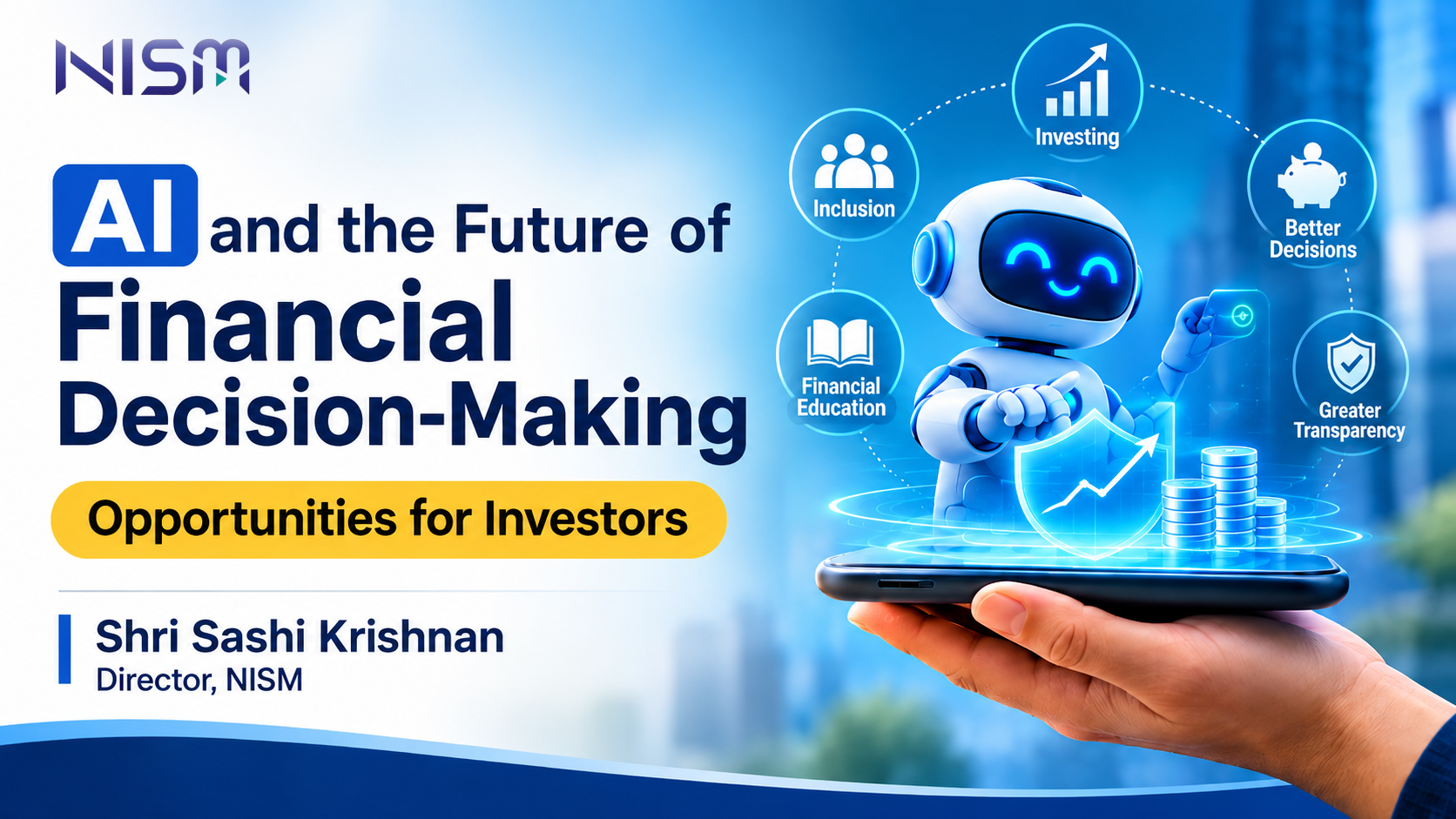
Digitization is rapidly reshaping the financial sector. UPI, discount broking apps, online mutual fund platforms, digital lending, and app-based insurance have changed how individuals access financial products and manage their money. Retail participation in capital markets has widened as mobile applications have lowered the cost, time, and effort of investing. The benefits are real: wider choice at lower cost, greater speed and convenience, and personalization across payments, banking, saving, insurance, and investing. The Artificial Intelligence (AI) wave adds another layer on top of these, because the source of advice itself is now both automated and persuasive. Increasingly, investors are using AI tools to choose financial products and for budgeting, credit management, investing, and retirement planning.
When applied thoughtfully, AI can act as a force multiplier. Some of the benefits that AI will bring investors are:
Inclusion and access: AI can summarize, simplify, and translate complex financial documents for investors with low digital literacy or language barriers. Voice-based conversational interfaces can help those who struggle with complex digital screens, including older adults. For instance, UPI launched conversational payments, and NPCI partnered with the government’s Bhashini language-translation platform to enable voice-based payments in Indian languages.
Better financial decisions: Research suggests AI guidance can move consumers closer to what economic theory prescribes: participation in diversified equity funds, a declining equity share over the life cycle, and adequate savings buffers. Retail investors can use AI to receive suggestions that account for their risk profile and financial goals, opening access to guidance for those who cannot afford a professional adviser. AI tools embedded in banking and personal finance apps can categorise spending, forecast expenses, suggest debt-repayment strategies, support retirement and insurance choices, and help with tax planning.
Reducing information asymmetry: AI helps consumers gather information and compare options, narrowing the knowledge gap between them and the providers. It can counter common behavioral biases such as status-quo bias (sticking to products already held) and choice overload. It can also help investors exercise their rights by assessing whether they have grounds for a complaint, drafting claims, and navigating dispute processes, which matters for SEBI SCORES and ombudsman mechanisms.
Personalized financial education: AI can deliver education at teachable moments, when a decision is actually being made, in multiple languages and formats (text to video, podcasts, interactive tools). Because money matters are sensitive, investors may be more willing to ask an AI agent questions, which they would hesitate to ask a human. Designers of financial literacy programmes are increasingly combining AI with behavioral science to align education with how people actually think and behave.
Without a doubt, the next generation of Indian investors, many of them first-generation reaching markets through a phone, will leverage AI more than their predecessors did. The financial ecosystem will need to be prepared for this new world.
Digitization is rapidly reshaping the financial sector. UPI, discount broking apps, online mutual fund platforms, digital lending, and app-based insurance…
Last Updated on: October 29, 2026 If you’re confused about capital gains tax on your investments in listed shares, mutual…
Trusting AI with your money is subject to market risks If you have asked ChatGPT, Gemini or Claude any money…
© 2026 National Institute of Securities Markets (NISM). All rights reserved.
