
Notifications 5
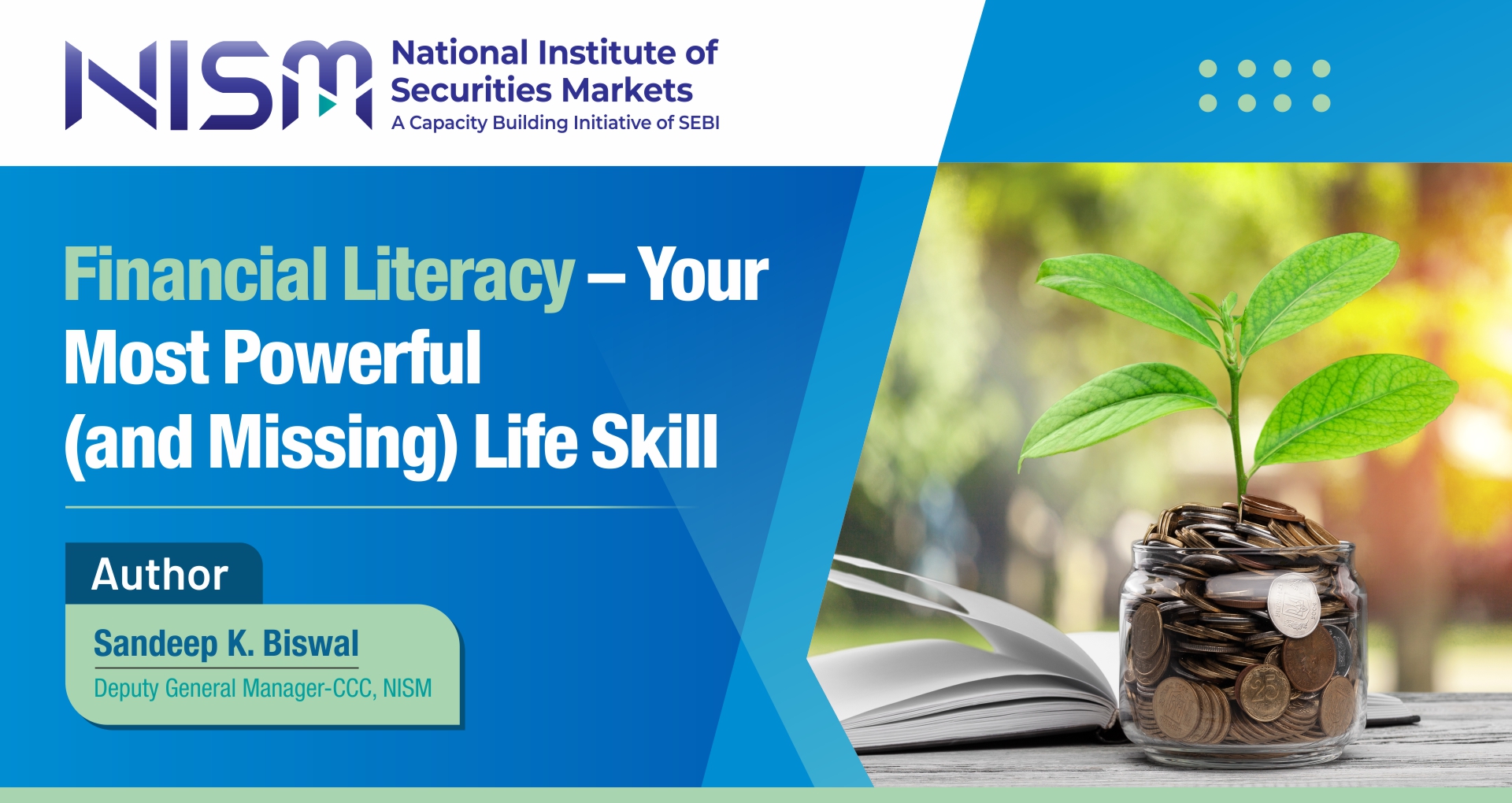
Financial Literacy – Your Most Powerful (and Missing) Life Skill
By 2035, Gen Z will have a 50% share in total consumption spending in India, amounting to nearly $2 trillion USD, according to a study by Snap Inc. and the Boston Consulting Group (BCG). This is both thrilling and terrifying. Thrilling because, as the report puts it, they will become a formidable economic power, the most dominant among all others, such as Gen X, Millennials, and Gen Alpha. And terrifying, because only about 30% of Indians in the 18 to 29 age group are financially literate, according to a 2019 study by NCFE. Without proper financial literacy skills, this power can easily shape a future of stress, anxiety, and a debt trap. This is not a hypothetical fear. A study conducted by Arta Finance confirms this, which states that around 30% of Gen Z report that financial issues are their primary source of stress.
The dark side of social media, EMI schemes, and BNPL transactions
The BCG study (as referenced above) reports that, for Gen Z, change is an opportunity for growth. Over 70% of Gen Z look forward to ‘NEW.’ From new styles to new looks, and from new tech to new experiences. They see change as an opportunity to celebrate. While embracing change can’t be a reason to blame Gen Z, how they handle their money in effecting this change is indeed worrisome.
Whether to buy Coldplay concert tickets or iPhones, Gen Z wants to have it all. Social media has greatly influenced this behavior. A Gen Zer feels constant pressure to keep up with online trends, also known as ‘flexing’. And the urge to flex is so strong that, when they don’t have the means, they borrow. Take a look at this news article, which states that 70% of iPhones in India are purchased through loans. Or this article, which mentions how a small BNPL transaction of rupees 5000 spiraled into a rupees 4.2 lakh debt.
This is not a blog about blaming Gen Z for being reckless with their money. After all, they grew up in an era of the internet, cheap data, easy credit, and on-demand entertainment. So, I can understand that, in a way, they have been pushed into it. However, the core issue here is the lack of basic financial literacy skills.
We often misunderstand financial literacy as complex knowledge of the stock market. In reality, it’s about the basics – of saving, budgeting, understanding credit, investing, etc. These basic skills will help you understand that the average annual interest rate on a credit card debt is around 45%. Basic financial literacy will also help you realise that if you continue making minimum payments, this may temporarily prevent you from being marked as a defaulter. Still, as interest continues to compound, the financial burden will push you into a downward spiral.
Financial Literacy Course for Bharat
The first and best step you can take is to educate yourself to become financially literate. There is plenty of content available on this topic. But I strongly recommend starting with the “Financial Literacy Course for Bharat” offered by the NISM eLearning.
Here is the direct link to enroll: Financial Literacy Course for Bharat
It’s a comprehensive 22-hour online course that lets you learn anytime, from anywhere. It covers everything from money management and budgeting to debt, investing, and long-term planning. And the best part? It’s free and includes a certificate.
Apart from this course, the SEBI (Securities and Exchange Board of India) and NISM (National Institute of Securities Markets) conduct the National Financial Literacy Quiz (NFLQ), a premier nationwide competition designed for undergraduate and postgraduate students to showcase their knowledge of financial literacy and securities markets. NFLQ 2026 is currently underway.
Take this course. Participate in NFLQ. Talk to your friends about it.
Author: Sandeep K. Biswal, Deputy General Manager-CCC, NISM
The Union Budget 2026, presented by Finance Minister Nirmala Sitharaman, marks a watershed moment in India’s economic narrative. Dubbed the…
The Budget 2026 brought a huge setback for the Sovereign Gold Bond (SGB) investors. Before Budget 2026, all redemptions of…
Volatility risk is well known, but that is usually less dangerous Retirees fear market volatility, and volatility is a risk…
© 2026 National Institute of Securities Markets (NISM). All rights reserved.
