
Notifications 9
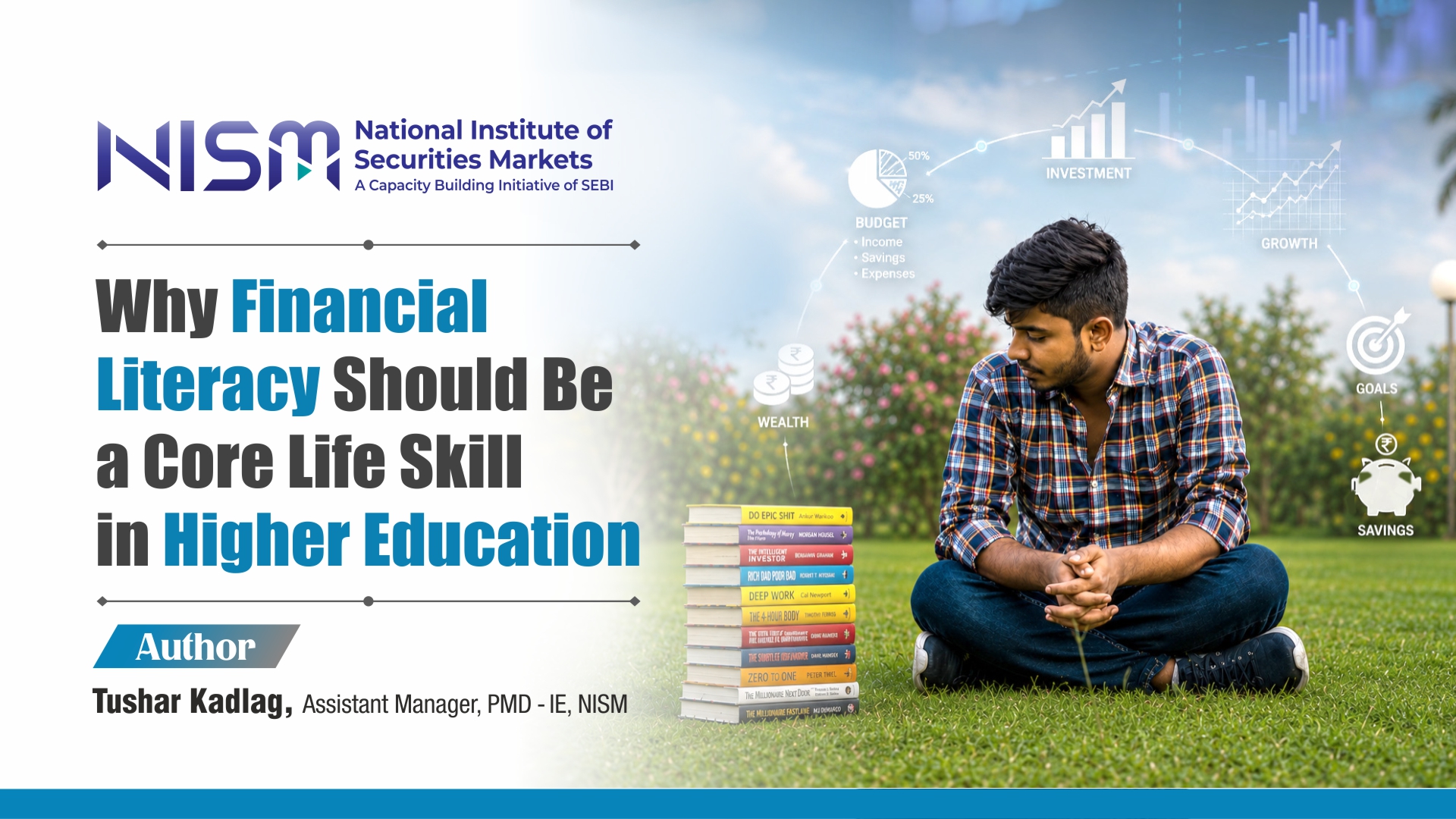
Through financial literacy and investor education outreach initiatives, I have often interacted with students preparing to enter professional life. One observation consistently stands out: while academic education prepares students for careers, financial literacy prepares them for life.
Sharing a few thoughts on why financial literacy deserves greater attention within higher education. During investor education and financial literacy outreach programs, I frequently interact with students who are preparing to enter professional life. Many of them are ambitious, career-focused, and academically capable. Yet when discussions turn to budgeting, insurance, emergency funds, or salary planning, a common question emerges: Are we truly preparing students for the financial realities of adulthood?
The transition from campus to corporate life is one of the most significant phases in a young person’s journey. Receiving the first salary brings excitement, independence, and new responsibilities. However, it also raises practical questions. How much should one save? How should expenses be planned? Is insurance necessary? What is the difference between spending, saving, and investing?
One interesting observation from student interactions is that financial literacy itself remains a misunderstood concept. For some, it means investing in the stock market, while for others it is limited to saving money in a bank account. At the same time, many students possess strong academic knowledge but limited understanding of personal finance. This observation highlights an important opportunity to strengthen student development initiatives in higher education.
Financial literacy is not a specialized skill meant only for finance professionals. It is a practical life skill that helps individuals make informed decisions about earning, spending, saving, borrowing, protecting, and investing money. It begins with simple but essential concepts such as budgeting, goal setting, emergency preparedness, understanding salary structures, digital payment safety, and responsible financial decision-making. These are life skills that every student requires, irrespective of academic discipline or career path.
The modern economy is increasingly digital. Students today are active users of UPI, online banking, digital wallets, and e-commerce platforms. While technology has made financial transactions more convenient, it has also increased exposure to cyber frauds, impulsive spending, and financial misinformation. Financial awareness has therefore become essential not only for wealth creation but also for financial protection.
The National Education Policy (NEP) 2020 emphasizes holistic development, life skills, critical thinking, and employability. Financial literacy naturally aligns with these objectives. A financially aware student is often better equipped to make informed decisions, manage professional transitions, evaluate opportunities, and plan for long-term goals.
Higher Education Institutions can play an important role in bridging this gap. Short workshops, value-added courses, expert interactions, and practical learning sessions can help students develop financial confidence before entering the workforce. Topics such as understanding salary structures, budgeting, insurance, financial planning, digital safety, and career readiness can create meaningful impact without adding significant academic burden.
As India continues its journey towards becoming a knowledge-driven economy, preparing students for the future requires more than academic excellence. Future-ready graduates must be capable of making informed financial decisions, managing resources responsibly, and navigating an increasingly complex financial environment.
A degree may help a student secure employment, but financial literacy helps them navigate life beyond the workplace. As higher education evolves to meet the demands of a changing world, financial literacy deserves recognition not merely as financial knowledge, but as a fundamental life skill for every student.
Disclaimer: This article represents personal observations and perspectives on financial literacy and is shared for educational purposes only.
Author: Tushar Kadlag (Assistant Manager, PMD – Investor Education, NISM)
Why Financial Literacy Should Be a Core Life Skill in Higher Education Through financial literacy and investor education outreach initiatives,…
Last Updated on: June 30, 2026 The Reality Beneath the Glass Ceiling: Why Leadership Equality Still Matters A recent report…
Through the Lens of Circuit Breakers: Why does the Stock Market Hit Pause? Imagine this. Monday morning, June 23, 2025.…
© 2026 National Institute of Securities Markets (NISM). All rights reserved.
